
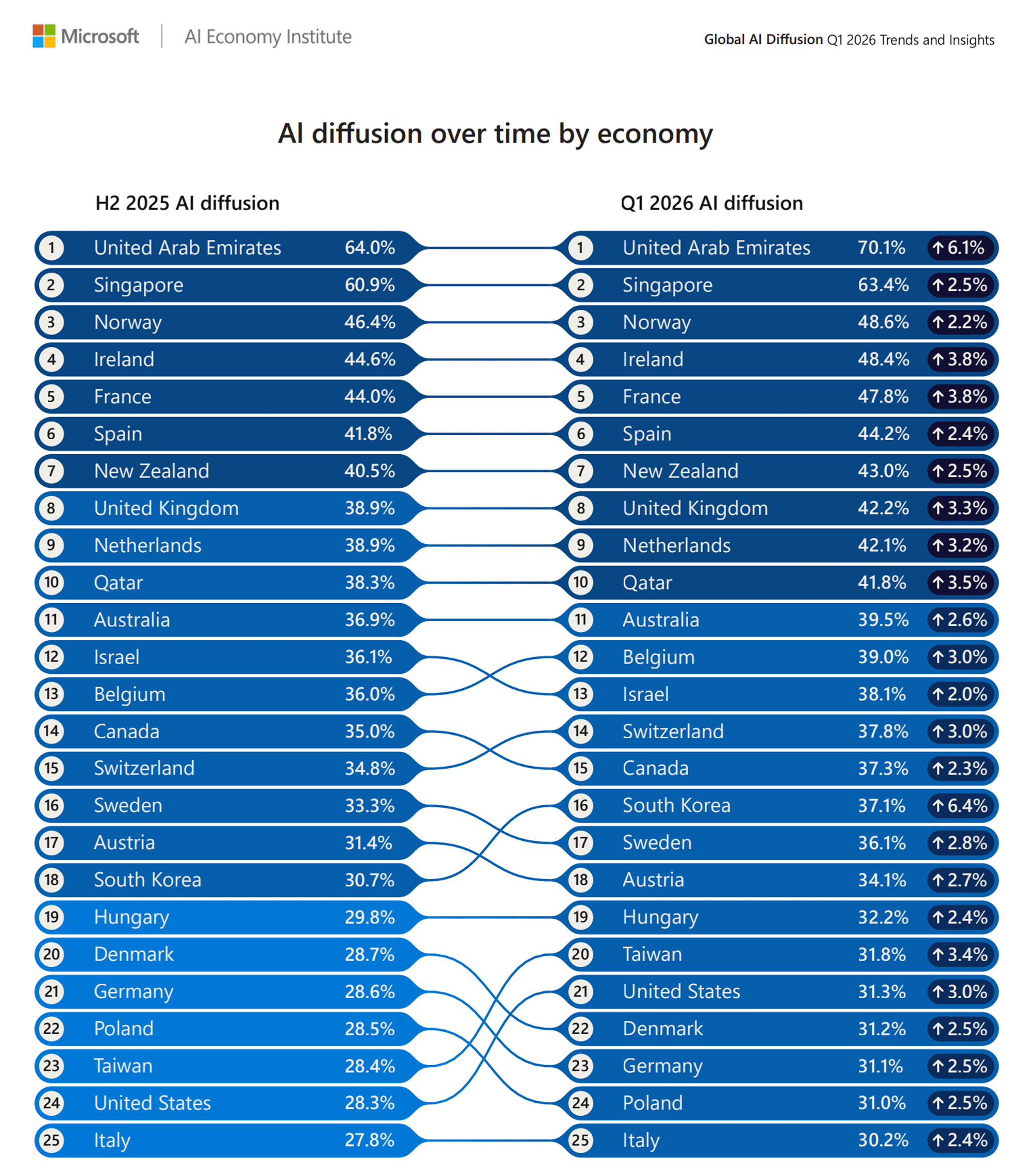
The UAE has recorded the highest AI adoption rate globally, with 70.1% of working-age population using AI in Q1 2026, according to Microsoft’s Global AI Diffusion Report. That places the UAE far ahead of the global average of 17.8% for the same quarter (up from 16.3%), making adoption in the UAE more than four times higher than the worldwide figure. Singapore ranks second, followed by Norway, Ireland, France, Spain, New Zealand, the UK, the Netherlands, and Qatar.
This result is the latest milestone in a sequence that stretches back to the UAE’s Artificial Intelligence Strategy 2031. The strategy, launched to serve the longer Centennial 2071 vision, laid out a national roadmap targeting nine sectors, namely energy, logistics, healthcare, tourism, education, space, aviation, water, and technology, with the explicit goal of embedding AI across government operations and economic life well before the end of the decade.
Instead of hoping that AI would simply take hold on its own, the UAE published a timeline and tied it to specific, measurable commitments that the market could see and track.
Recent announcements fit into a wider national timeline
Several high-profile initiatives announced in the first half of 2026 reflect the UAE’s continued progress under its wider national roadmap. Notable ones include:
April 2026: Dubai confirmed it is developing a one-stop digital services model that will consolidate 500+ government services for individuals and businesses into a unified platform within a year. The result is that an international business can follow the progress, see when the platform is live, and time its own market entry around a concrete government timeline, ultimately removing guesswork among decision-makers.
May 2026: Sheikh Hamdan bin Mohammed bin Rashid Al Maktoum launched an initiative to move Dubai’s private sector toward Agentic AI within two years. This aligns with a broader UAE framework aiming to deploy Agentic AI across 50% of government sectors, services, and operations within the same two-year window. The programme highlights shared delivery targets such as healthcare claims processing, customs clearance, and energy distribution, and frames Agentic AI as systems capable of executing tasks autonomously within defined boundaries, while positioning private firms as active partners in implementation.
How AI is being used in practice
Microsoft’s report also breaks down how AI is currently being applied across the UAE’s working-age population:
- 48% use AI for work-related data analysis and reporting, a major capability for energy and logistics operations.
- 32% use it for customer service automation, directly supporting tourism and government services modernisation.
- 19% use AI for regulatory compliance and documentation, closely linked to priorities like customs processing and healthcare claims, which are two areas specifically referenced in the Agentic AI programme.
Taken together, these categories align closely with the functional outcomes the UAE has already prioritized at a national level.
 Previous