
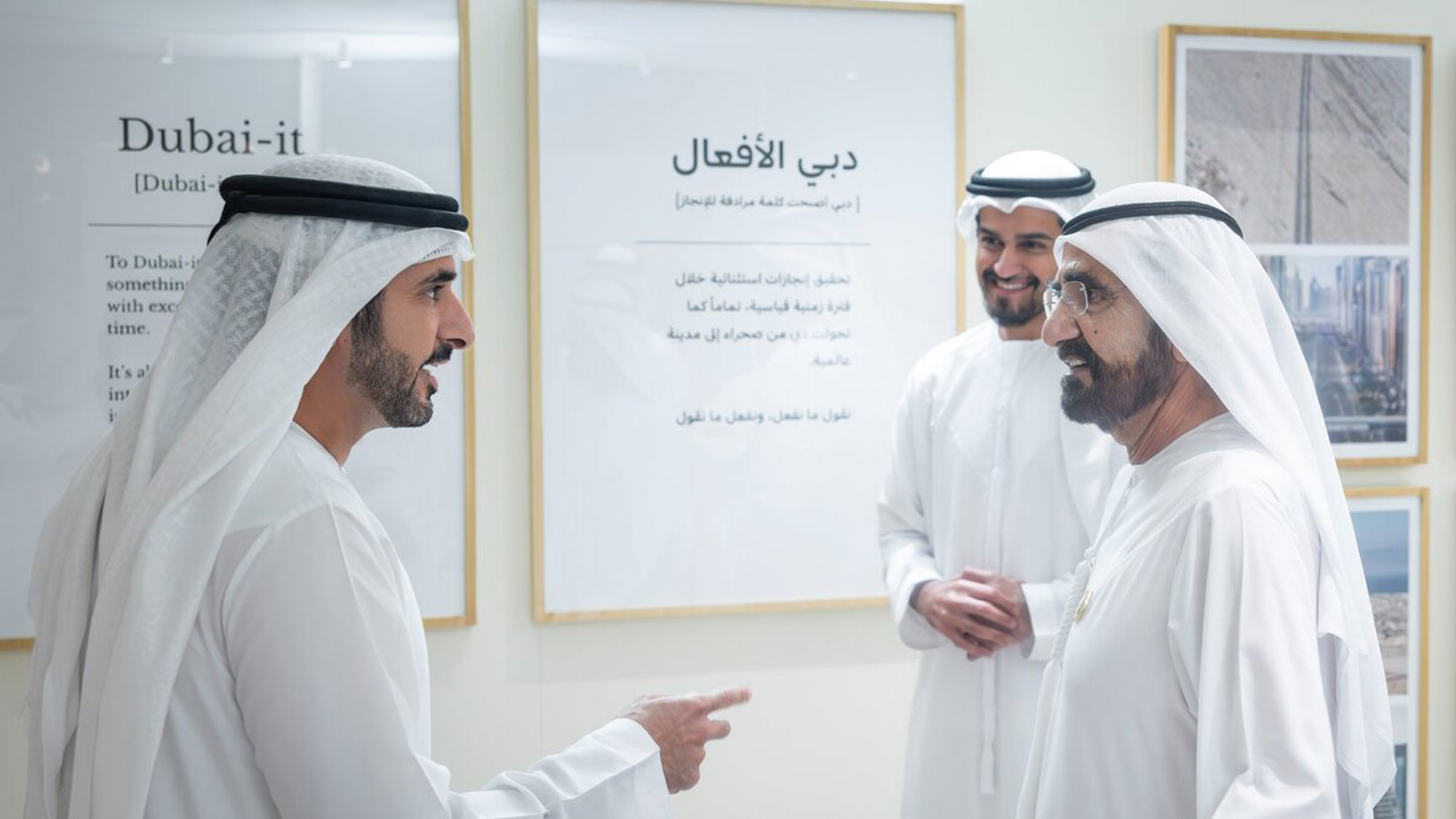
Dubai has made a policy decision, reflected in an award, to formalise its new approach to how it views success. Announced in June 2026, the award will recognise companies, entrepreneurs and government departments based on their achievements, measured against performance criteria such as delivery speed, quality and, specifically, their ability to deliver measurable results.
The most significant part of this announcement is the potential signalling effect for businesses contained within the two business categories. In essence, these categories represent the types of results that Dubai wants businesses to achieve.
Sheikh Mohammed bin Rashid Al Maktoum, Vice President and Prime Minister of the UAE and Ruler of Dubai, announced the introduction of “Dubai-it” as a verb referring to achieving something extraordinary using excellent methods and in record time. In announcing the initiative, Sheikh Mohammed stated that speed does not mean haste, quality does not mean delay and ambition has no value without execution.
Inherent in the initiative are three major expectations:
A series of developments in just over a week established the foundation of the Dubai-it initiative, moving it from a principle to a government application and, ultimately, an annual award.
17 June 2026: Sheikh Mohammed bin Rashid Al Maktoum introduced the concept of “Dubai-it” as a way to capture and transfer Dubai’s governing philosophy to future generations, institutions and companies.
22 June 2026: Digital Dubai hosted “Digitalizing Life in Dubai 2026”, which brought together government agencies responsible for providing services, collecting/distributing data and managing digital technology. This event was represented as a real-world example of how Dubai-it could be applied, specifically through developing collaborative practices to enable the rapid deployment of integrated services enabled by artificial intelligence (AI).
24 June 2026: H.H. Sheikh Hamdan bin Mohammed bin Rashid Al Maktoum, Crown Prince of Dubai, Deputy Prime Minister, Defence Minister and Chairman of The Executive Council of Dubai, directed the start-up of the first annual Dubai-it Award. Categories include projects/institutions/people, and specifically mentioned are companies and entrepreneurs.
The progression in this case was important because each step provided an additional dimension to the concept. First, it established the principle; secondly, it illustrated how that principle could be used to direct multi-level government delivery; and finally, it set up a structure by which achievements that fit the principles could formally be recognised.
The awards comprise four categories related to projects, two categories related to institutions and two categories related to people.
1. Government project achieving exceptional results in record time
Recognises tangible output generated swiftly while maintaining quality.
2. Technology-based projects that convert concepts into functional solutions.
Recognises a technology-based project resulting in quantifiable and sustainable outcomes.
3. Educational projects embedding the philosophy of Dubai-it
Recognises efforts promoting achievement/accountability/results-focused culture.
4. Real estate projects creating urban impact
Recognises developments contributing significantly to Dubai’s urban/economic/social environment.
5. Government institution distinguished by speed and achievement
Recognises an agency having incorporated a commitment to achievement/outcome into its organisational culture.
6. Company that has achieved significant transformation
Recognises a company that has undergone significant changes in terms of its corporate performance/operations/market position.
7. Project Manager of a government project who successfully implemented an exceptional achievement
Recognises a successful conversion of a government vision into tangible results through effective planning/execution.
8. Entrepreneur who transformed an idea into exceptional success
Recognises a new entrepreneur who successfully converted an innovative idea into a successful business with tangible results/significant impact.
In summary, the award will evaluate achievements on three separate levels. Project categories are based on what was accomplished through projects. Institutional categories reflect how organisations work together to improve themselves. Individual categories recognise individuals who made the objective a reality. This way of evaluating achievement ensures that different kinds of achievements are not evaluated as though they are equivalent.
Dubai-it is not a new law, licence or regulatory requirement. Its relevance to the business community lies in the performance expectations expressed through the company and entrepreneur categories.
When international companies enter the UAE market, they typically present their technology, global experience and/or growth potential. However, under the Dubai-it standard, these credentials represent just one part of the overall proposal. In addition, companies must describe what they can offer within the UAE market.
A credible case to support your entry into the UAE market needs to answer the following four questions:
Again, while these criteria are not formal entry requirements, they are important factors to consider prior to operating in an environment where execution is emphasised as being important.
This category focuses on measurable transformation in corporate performance, operations or market position rather than the company’s presence alone. Examples of contributions that might fall under this category include increased efficiency, new capabilities, greater access to a particular service, strengthened market infrastructure and/or creation of a new commercial segment. A clear comparison between pre- and post-implementation provides a basis for measuring results.
This category includes all elements of taking an innovative idea and turning it into a successful venture. While originality is an element of consideration in this category, the idea must also have developed into a fully functional business providing meaningful benefits.
Depending upon the nature of the venture, examples of evidence of having successfully taken an idea to reality may include paying customers, repeat orders/demand, revenue generated, level of adoption/acceptance, successful pilot projects or measurable benefits provided to users/customers.
It should be noted that the statement regarding achieving success rapidly does not imply an expectation for rapid growth at any cost. Rather, it implies that speed and excellence go hand in hand and therefore the rate of progress must continue to be supported by a viable product offering, good corporate governance and consistent ability to deliver.
The nomination process, company eligibility criteria, evaluation method and timeline for the first round of the awards have still not been announced. As such, the announcement did not include any information regarding the types of supporting documentation applicants will need to substantiate their claims or how performance across various industries will be evaluated.
While the categories appear to outline the expected direction of the awards, they currently do not give applicants, whether companies or entrepreneurs, a full understanding of what is required to apply. Nonetheless, companies and entrepreneurs can begin creating documentation related to their original business premise, goals, deliverables and outcomes.
“Dubai-it” is most visibly demonstrated through Dubai’s transformation over the past few decades from a dry, sandy desert into one of the world’s leading urban centres.
Dubai has undergone a dramatic transformation over the past thirty years. From being a small trading centre, it has evolved into an important global hub for aviation and air transport, logistics and supply chain management, financial services, tourism and foreign direct investment. Dubai’s rapid growth and development have been supported by expanded capacity in the physical and institutional infrastructure required for operation and development. Today, over 95% of Dubai’s gross domestic product (GDP) is derived from non-oil-sector activity.
Government reform initiatives undertaken in Dubai have also followed a similar model. As part of its Paperless Strategy, launched in 2018, Dubai aimed to achieve fully electronic transactions and procedures among all government agencies and external entities. Through the collaborative efforts of multiple government agencies, Dubai completed its transition to paperless transactions by the end of 2021. Like other significant infrastructure developments in Dubai, completing this initiative required coordination among many different agencies, involved numerous stakeholders and represented a substantial undertaking.
These achievements therefore illustrate success on a scale far greater than isolated or singular accomplishments. They reflect the collective potential of infrastructure, institutions and government processes working together to attain measurable results within a short period in the developmental history of a city.
The proposed programme will not force business and entrepreneurial leaders to follow a theoretical model. However, it will provide a name for the process observed throughout Dubai: creating goals beyond previously perceived boundaries of possibility, developing and implementing plans to achieve those goals through disciplined processes and documenting tangible proof that they were achieved.
While important operational details related to the award need to be made available before a complete understanding of it can be achieved, the proposal has established clear criteria for recognising the achievements it seeks to honour.
Don’t forget to share this post!
Join our network for the latest news, announcements and more.

Copyright © 2024 Seed Group. All Rights Reserved.
We use cookies to enhance your experience on our website. If you continue using this website, we assume that you agree with these. Learn more.

 Previous