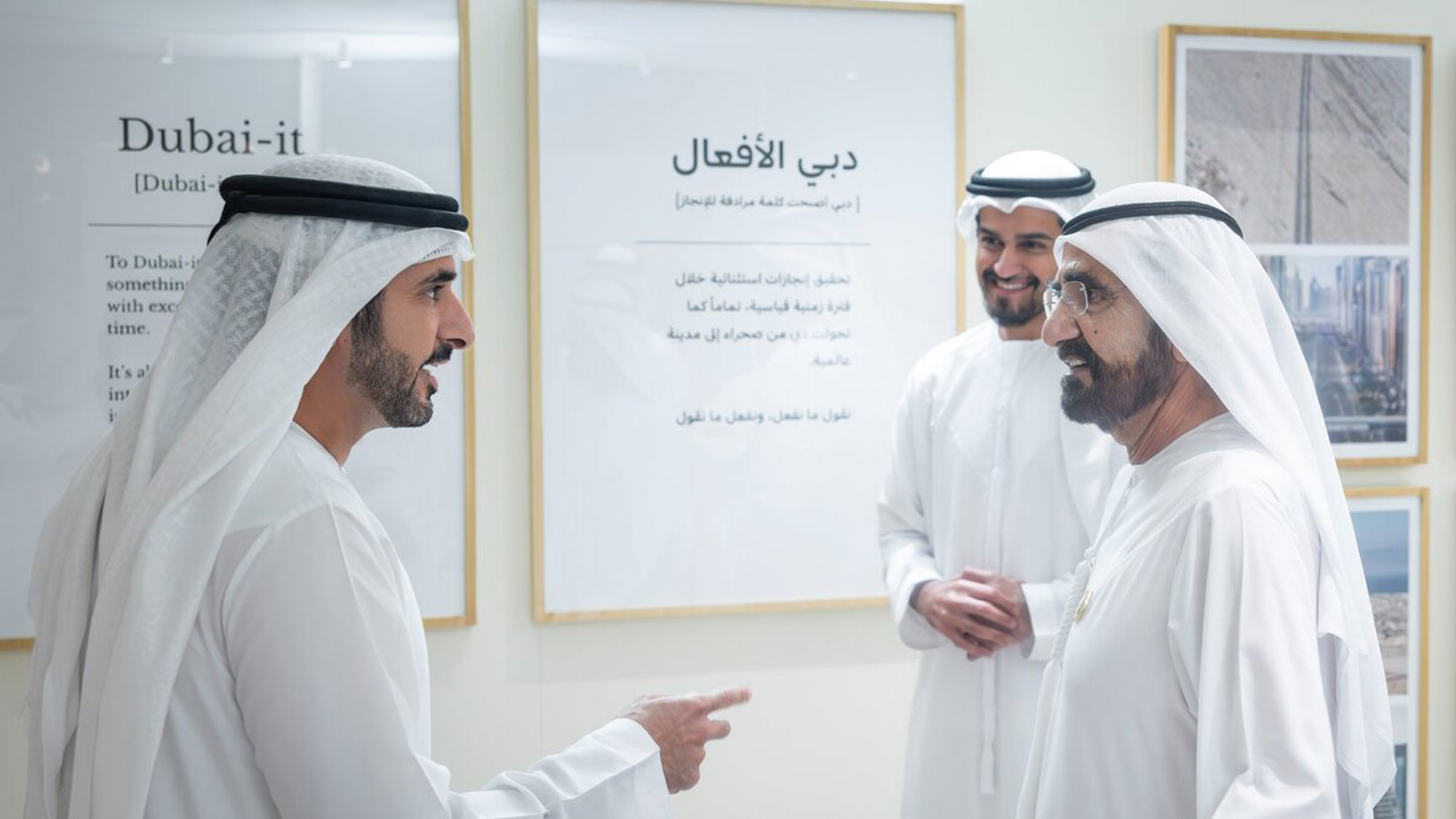
Dubai has announced an AED18 billion development package covering major projects in roads, investment, customs, population data, culture, education, financial technology and the city’s address system.
Approved by His Highness Sheikh Hamdan bin Mohammed bin Rashid Al Maktoum, Crown Prince of Dubai, Deputy Prime Minister and Minister of Defence of the UAE, and Chairman of The Executive Council of Dubai, the package brings together eight initiatives: the First Al Khail Street Development Plan, Dubai Population Now, the Dubai Investor Register, Dubai Customs Strategy 2030, Dubai Cultural Strategy 2033, the Emirati Talents Strategy in Private Education, a new visual identity for Dubai’s address system and the Global Centre for Technology and Innovation in Islamic Finance.
These initiatives reflect the scale of Dubai’s next great development challenge. As a city becomes larger, it requires greater mobility to accommodate increased numbers of people moving throughout the city each day, greater amounts of data to assist with public planning, administrative systems capable of supporting increasing business growth, increasingly streamlined trade processes and greater levels of talent flowing into more diversified economic sectors.
These initiatives can also be viewed as being developed around three major themes:
Population growth in Dubai was significant last year. By the end of 2025, Dubai had 4.58 million people, up from 4.25 million in 2024, an increase of 332,000, or 7.5%, in one year. Growth at such a rate creates demand for increased transportation, housing, education, healthcare, commercial and retail space, as well as other public services.
In addition to population growth, Dubai’s overall economic agenda will also significantly increase the scope of the city’s development. The Dubai Economic Agenda D33 seeks to double the size of Dubai’s economy during the coming decade, attract more than AED650 billion in foreign direct investment and generate AED1 trillion in private-sector investment by 2033.
For residents, this means greater accessibility to essential services and transportation options. For companies, the potential effects on their operations will include the availability of qualified workers, reliable supply chains, customers located near their offices and/or manufacturing sites, and fewer restrictions on expanding within Dubai and beyond.
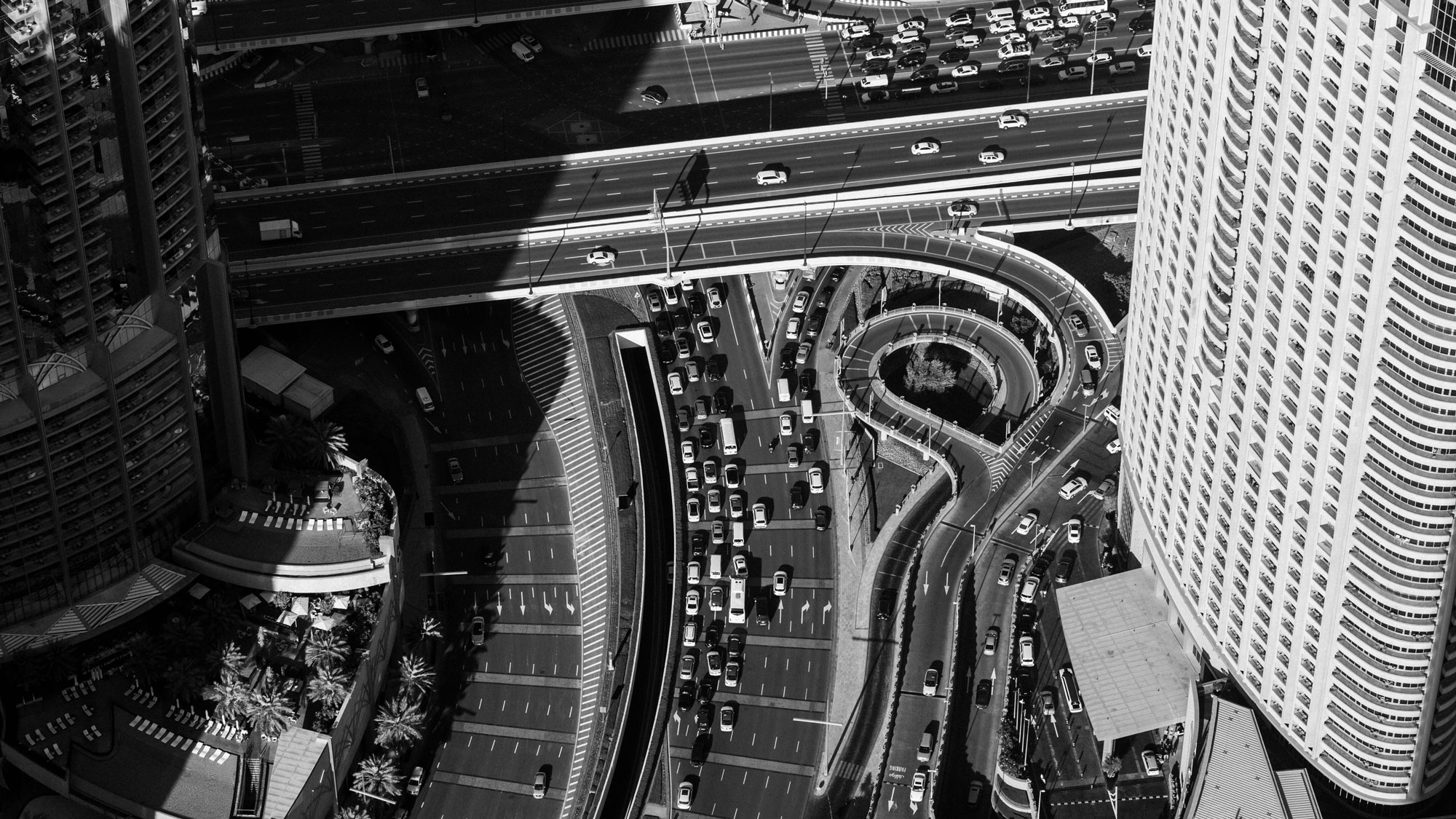
The First Al Khail Street Development Plan, the largest infrastructure component within the AED18 billion package, will introduce a 15-kilometre elevated corridor parallel to Sheikh Zayed Road, with three lanes in each direction. Construction is scheduled to start in Q3 2027 and conclude in Q4 2030, with modern construction methods intended to accelerate delivery while limiting disruption to traffic in the area.
It is estimated that there are over 2.6 million people who reside within the boundaries of the 15 km stretch of elevated highway. Therefore, when finished, the increased vehicle-carrying capacity is anticipated to rise by about 9,000 vehicles per hour. Additionally, it is believed that the travel times of commuters travelling through the area via Sheikh Zayed Highway could potentially decrease from current levels by as much as 51% during peak hours.
In addition to providing improved connectivity to the residents of these four large geographic areas, Al Barsha, Al Quoz, Business Bay and Meydan, the corridor will also improve access to other geographic areas that contain business, industry, tourist destinations, hotel districts and creative zones. Beyond improving connectivity for these areas, the corridor will also strengthen access to areas with business districts, industrial activity, hotels, tourism destinations, and creative zones. As a result, improved mobility could widen access to employees, customers and suppliers, while making multi-location operations easier across the city.
The Dubai Population Now programme provides a planning tool for this investment. It will use artificial intelligence and predictive analysis to provide live population data for decisions related to housing, education, healthcare and transportation. Real-time population information can help government agencies identify areas where demand is growing and where services such as schools, hospitals, clinics, roads and housing may need to expand.
The proposed Dubai Investor Register could become one of the most important tools, with a twofold purpose: to create a centralised database of entities operating or investing in Dubai, and to enable companies and investors to operate across multiple zones without having to register again. Unified registration procedures and data are also intended to lower registration and regulatory compliance costs, while helping companies comply with requirements established by the Financial Action Task Force.
As noted previously, Dubai offers a wide variety of different types of business structures that provide companies with numerous options for entering the Dubai marketplace. However, while offering flexibility is valuable when attempting to enter a new market, moving from entry into expansion can be cumbersome due to repeated procedures and disparate records maintained in multiple jurisdictions.
A single registration system may simplify the process of moving into a new geographic area after entering a marketplace. The extent of this impact is dependent upon specifics regarding jurisdictions that will participate in the system, who will be eligible to use it, how it will integrate with existing systems and when it will be launched.
Dubai Customs Strategy 2030 addresses trade facilitation, economic partnerships, security, regulatory compliance and customer and partner experiences. For companies, customs performance impacts delivery time, working capital, the reliability of their supply chain and the cost of operation. For Dubai, efficiency in processing through customs helps maintain its position as an international hub for trade while ensuring there are adequate controls to allow for safe and legally compliant trade.
Dubai is investing in sectors and skills that can strengthen its long-term competitive position. Dubai’s Cultural Strategy 2033 includes goals such as supporting more than 6,000 regional creative professionals, recruiting more than 6,000 international creative professionals, doubling the value of Dubai’s cultural assets, increasing the cultural sector’s contribution to GDP to 5.4%, and creating public-private partnerships in the cultural sector worth approximately AED2.75 billion.
Together, these goals establish culture as part of the economy, with the creative industries contributing through design, media, events, tourism, intellectual property and start-ups. Cultural development also influences whether global talent sees Dubai as a temporary career opportunity or as a place to build a longer-term future.
The Emirati Talents Strategy in Private Education has established a goal of having 3,000 UAE nationals working in the private education sector by 2033. The strategy aims to do so by providing teachers with qualifications and accreditations, offering training programmes for teachers to gain hands-on experience in the classroom, creating flexible Emiratisation programmes for schools and giving retired educators the opportunity to continue contributing to their profession. Private education plays a central role in a city with a large international population, and increasing the number of UAE nationals in the sector could strengthen national career pathways while deepening the sector’s connection to UAE society.
Additionally, the Global Centre for Technology and Innovation in Islamic Finance will provide connections among Islamic financial institutions, technology companies and start-ups through innovation projects, platforms and events specific to the Islamic finance industry. Also, DIFC Academy will develop a talent programme that will target more than 3,000 trainees by 2031.
Companies and investors should view the AED18 billion package as an indication of where Dubai expects future demand to grow and where implementation capacity will be needed. The most apparent areas are:
The companies best placed to benefit from Dubai’s economic development will be those that can meet specific needs, rather than simply claim alignment with the city’s growth plans.
Any serious proposal for entry into Dubai markets should provide answers to practical and specific questions:
For Seed Group and its partner ecosystem, the package provides a clear view of Dubai’s emerging priorities. International companies entering the UAE and wider region will be better positioned when their capabilities respond to a defined local need and demonstrate practical value.
Dubai’s AED18 billion plan can be placed into a broader framework, which includes infrastructure, institutions and sector-specific programmes.
A good example of how these three areas have been addressed can be seen through the Dubai 2040 Urban Master Plan. This plan provides a way to address the projected population of Dubai residents from approximately 3.3 million in 2020, with an expected increase to approximately 5.8 million by 2040. Additionally, the daytime population of Dubai will go from approximately 4.5 million in 2020 to 7.8 million in 2040.
In addition to addressing the projected increase in population, the Dubai 2040 Urban Master Plan focuses on making use of what exists today as a part of the current city, rather than expanding the size of the city. In doing so, it emphasises the importance of developing new buildings and other types of developments around established urban community hubs.
This same thinking has been applied to multiple aspects of the City of Dubai. The first area is the movement between various districts of the city via First Al Khail Street. The second area is the ability to better utilise data for public planning purposes via Dubai Population Now. Lastly, both the Investor Register and Dubai Customs Strategy 2030 deal with the necessary administrative and trade environments for a much larger economy.
Transport is seen as more than just a public service in this package. When residents are able to travel more easily between their residential community and shopping district, or from their place of residence to work and industrial areas, and then to visit tourist destinations, it makes all parts of the city much more livable, much more workable, and much more attractive for businesses to operate within.
Historically, Dubai’s development has largely been based on its preparation in advance of clear signs of growing demand. The AED18 billion package continues along those lines by preparing the underlying elements of infrastructure, institutions and talent prior to what would likely represent a greater number of residents in the long term, a larger and more diverse business base and a more diversified economy.
Don’t forget to share this post!
Join our network for the latest news, announcements and more.

Copyright © 2024 Seed Group. All Rights Reserved.
We use cookies to enhance your experience on our website. If you continue using this website, we assume that you agree with these. Learn more.

 Previous