
⬇ Download the eBook: 2025 year-end review: The leading stories and economic outcomes boosting Dubai’s business competitiveness
Table of contents
As the year 2025 has concluded, Dubai’s economic performance highlights its steady rise as a globally recognised urban economy. The Dubai Data and Statistics Establishment reported a 4.4% GDP increase in the first half of 2025, reaching AED 241 billion. This growth was driven by a range of industries and steady investor confidence. These positive trends helped foreign investors and entrepreneurs effectively set up businesses in Dubai, especially in high-value, tech-based sectors.
Healthcare, construction, real estate, financial services, trade, and digital sectors all grew in 2025. Healthcare and social work saw the biggest increase at 20%. Meanwhile, construction rose by 8.5%, and real estate grew 7%, helped by a 40% jump in property sales. On the other end, financial and insurance activities went up 6.7% as wholesale and retail trade increased 4.4%, accounting for almost a quarter of total output.
This performance reflected another year of measurable progress under the Dubai Economic Agenda, which aims to double the emirate’s economy by 2033 and ensure it is among the world’s top three cities to invest in, live in, and work in. The 2025 results highlighted how coordinated public-private execution, digital transformation, and sector diversification continue to enhance Dubai’s business environment while reinforcing global competitiveness.
This e-book thoroughly explores the emirate’s economic milestones and significant stories in 2025 that have contributed to its commercial sector growth. If you want to start a business in Dubai or learn about the incentives that make it an attractive hub for companies worldwide, this guide provides useful insights into the emirate’s robust economy.
Below is a list of Dubai’s top economic achievements and rankings in 2025 that defined its business competitiveness.
Dubai placed #9 in the 2025 Global Power City Index (GPCI), compiled by Japan’s Mori Memorial Foundation. This marks a great improvement in key economic and social areas.
For the first time, Dubai entered the top 10 for Economy, thanks to higher GDP growth and enhanced economic freedom. It also improved in Cultural Interaction, moving up to 5th for the number of international conferences and making gains in nightlife, shopping, and dining. In Accessibility, the city ranked 3rd worldwide for cities with direct international flights. Livability also improved with more medical staff and better mental health support.
Dubai’s GDP growth ranking in the Economy category rose from 42nd to 10th, and its Economic Freedom ranking improved from 17th to 15th, making it one of the top risers in 2025. Corporate executives ranked Dubai 4th as a global business location, highlighting its strong workplace variety and growing startup scene, which moved up from 9th to 4th.
Moreover, Dubai climbed from 5th to 4th, thanks to its appealing shopping and dining options. These results undeniably made Dubai an even more attractive destination for entrepreneurs looking to start their companies.
Dubai is the #1 city for tourism in the MENA region, according to Euromonitor International’s ‘Top 100 City Destinations Index 2025’. The city attracted visitors from key markets like India, the UK, Saudi Arabia, and Russia. High occupancy in affordable luxury hotels and a packed schedule of international events boosted tourism.
Globally, Dubai was ranked 12th among the world’s top city destinations. The Dubai International Airport reported record traffic with 24.2 million guests in Q3 2025. This contributed to a total of 70.1 million passengers in the first 9 months of the year.
Emirates showcased its leadership in global aviation in 2025 by winning several prestigious awards. At the ULTRAs Travel Awards, the airline was recognised as the ‘Best Airline in the World’ and received accolades from Forbes Travel Guide. These awards highlight its strong performance in Premium Economy, long-haul flights, and customer service.
Additionally, at the 32nd World Travel Awards in Bahrain, Emirates was named ‘World’s Leading Airline Brand’ and received top honours for in-flight entertainment, First Class experience, First Class Lounges, and the Skywards loyalty program.
On the financial front, Emirates reported a record half-year performance in 2025-26, with profit before tax reaching AED 12.2 billion, marking the 4th consecutive year of record profitability for this period. Profit after tax rose 13% to AED 10.6 billion, while EBITDA increased to AED 21.1 billion. Group revenue for the first half of the year reached AED 75.4 billion, up 4% from the previous year, and cash reserves rose to a record AED 56.0 billion.
These results reflect Emirates’ strong operational management, enabling it to fund new aircraft deliveries, service existing debt, and pay dividends. This uptrend further underpins Dubai’s position as a hub for high-value international business and investment.
Dubai’s free zones received prestigious recognition at the 2025 Global Free Zones of the Year Awards, organised by fDi Intelligence. Notably, the Dubai Multi Commodities Centre earned the #4 spot globally and was honoured as the ‘Global Knowledge Zone of the Year’.
On the other hand, Dubai CommerCity secured 2nd place for the Middle East knowledge zone category. Additionally, Expo City Dubai was acknowledged as a global ‘rising star’, making it an appealing option for companies looking to expand or establish businesses in the city.
These awards underscore Dubai’s dedication to effective governance, sector specialisation, and fiscal incentives, inevitably making it an attractive destination for foreign-owned startups and SMEs.
Dubai has attained the #4 place globally in the IMD Smart City Index 2025, making it the top smart city across Asia. This remarkable achievement spotlights the city’s progress in digital transformation and places it among the world’s most advanced urban economies.
Specifically, the emirate received ‘A’ ratings across Smart City, Structure, and Technology indicators, driven by investments in digital transport, AI-powered public services, and transparent governance. Innovations such as real-time traffic updates, unified ticketing, and shared mobility solutions enhance efficiency for both businesses and residents. Alongside high-speed connectivity, cultural amenities, and a skilled talent pool, Dubai’s smart city initiatives reinforce its position as a competitive hub for launching businesses and attracting global investment.
Also read: 6 key achievements Dubai secured in 2025 that boost its global leadership
The following highlights showcase key developments that underscore why starting a business in Dubai remains a strategic choice for international investors and entrepreneurs.
In 2025, Dubai was named one of the world’s top four FinTech hubs in the Global Financial Centres Index (GFCI 38). The city’s performance across key assessment areas included:
The emirate’s sector rankings show its strengths: 4th in FinTech, 5th in trading, 6th in government and regulatory, 8th in professional services, and 11th in investment management and finance. These results showed Dubai’s strategic edge for tech-driven companies and its active support for innovation, especially in areas where technology is widely used.
Dubai maintained its global leadership in Greenfield FDI projects for the 8th consecutive half-year, according to Financial Times’ fDi Markets. During H1 2025:
DIFC recorded its strongest H1 performance in history, reinforcing its importance in Dubai’s economic vision and the broader business environment. Key metrics include:
DIFC’s banking and capital markets cluster hosted 289 companies, while the wealth and asset management sector expanded 19% YoY to 440 firms, supported by Dubai’s high concentration of private wealth.
The Centre remained a magnet for technology-driven enterprises, with 1,388 FinTech and innovation companies registered, marking a 28% increase YoY. This growth enhanced Dubai’s technology penetration and supported innovative solutions across the financial sector.
DIFC’s alternative investments ecosystem flourished, bolstered by regulatory reforms, technological innovation, and access to ultra-high-net-worth investors. The number of entities associated with family businesses increased by 73% YoY to 1,035, while the number of foundations grew 54% YoY to 842. Insurance and reinsurance also saw robust growth, with 135 firms and gross written premiums rising 35% YoY to AED 12.85 billion.
In addition, DIFC registered its 100th hedge fund, marking a milestone in its journey to become a top-five global hub for hedge fund managers. The total number of hedge fund managers doubled from 50 at the start of 2024, with 81 being billion-dollar AUM managers, highlighting the Centre’s appeal to large-scale investors.
DIFC also developed innovative infrastructure to support hedge funds, including the DIFC Funds Centre, a unique co-working facility that allows managers to establish quickly, operate cost-effectively, and expand rapidly. These trends underline the advantages of setting up a business in Dubai, particularly for investors seeking diverse and sustainable financial opportunities.
In 2025, the city launched several high-impact projects to support its diversification goals and its tech, AI, and smart city ecosystem:
Launched in January 2025 by the Dubai Centre for Artificial Intelligence, the Dubai AI Seal introduced a formal certification system for AI providers operating in the emirate. The initiative created a trusted framework that identifies verified companies eligible to collaborate on government and strategic projects.
Applicants were assessed across six criteria, including the scale of their AI talent, real-world deployments, and public–private partnerships. Certified firms received a unique digital seal and serial number, which can be displayed across corporate materials to signal credibility and compliance.
Crucially, AI Seal certification is mandatory for organisations seeking to work on AI-related government projects across the emirate. This requirement raises industry standards, reduces procurement friction, and creates transparent growth pathways for foreign AI entrepreneurs setting up their businesses in Dubai.
Launched during Dubai AI Week 2025 in April, the Dubai AI Academy represents a long-term investment in human capital. Developed under the Dubai AI Campus at the DIFC Innovation Hub, the Academy aims to train 10,000 executives, policymakers, and professionals in applied AI leadership.
The initiative was delivered in collaboration with DIFC Academy and globally recognised institutions such as Oxford University’s Saïd Business School, Udacity, and the Minerva Project. Early programs — including AI for Civil Service and Leadership in the Age of AI — focused on practical implementation, governance, and ethical deployment rather than abstract theory.
By aligning with the Dubai Universal Blueprint for AI, the Academy directly supports the emirate’s ambition to double AI’s contribution to GDP. For SMEs and founders entering the market, access to structured AI education helps close skills gaps that often slow expansion during the early stages of business setup.
In May 2025, the Dubai Land Department announced a landmark Real Estate Tokenization Project in partnership with Ctrl Alt. Developed under the Real Estate Evolution Space Initiative, the program enables property title deeds to be issued on a public blockchain.
Built on the XRP Ledger, the system synchronises digital tokens with the traditional land registry, ensuring transparency, regulatory compliance, and institutional oversight. Through the PRYPCO Mint platform, eligible investors can access fractional property ownership starting from AED 2,000.
By 2033, the tokenised real estate market is projected to reach AED 60 billion, accounting for roughly 7% of all property transactions in the emirate. For investors and tech founders evaluating setting up a business in Dubai, the initiative signals regulatory openness to financial innovation while maintaining strong governance standards.
Dubai’s Roads and Transport Authority introduced its Artificial Intelligence Strategy 2030 in the first half of 2025, demonstrating how applied AI can generate measurable economic and social impact. The roadmap comprises 81 projects aligned with the UAE AI Strategy 2031 and RTA’s Digital Strategy 2030.
The strategy is structured around six pillars and targets up to 20% operational cost savings alongside a 35% improvement in customer satisfaction. More than 40 AI use cases are already live, supported by a Big Data Platform integrating 49 internal systems and expanding at an annual rate of 30%.
Also read: 4 game-changing AI and tech projects fuelling Dubai’s digital economy in 2025
Here are several important initiatives that were rolled out in 2025 to help global startups and SMEs scale their business operations in Dubai:
Launched in October 2025, Dubai Founders HQ (DFHQ) introduces an integrated approach to entrepreneurship by combining physical infrastructure with a digital operating ecosystem.
With a physical base at 25hours Hotel One Central and a comprehensive digital layer, DFHQ reduced fragmentation in compliance and administration, allowing founders to focus on growth.
From legal structuring and banking to visas, tax and procurement, DFHQ offered practical tools that de-risk early-stage execution.
The Dubai Ecosystem Navigator provided access to market insights, competitor analysis and investor connections — key for founders learning how to start a business in the city strategically.
Supported by Dubai Economic Development Corporation, Dubai SME and Dubai Chambers, DFHQ aligns with the D33 agenda to create 30 unicorns and support 400 high-growth SMEs by 2033.
Approved alongside DFHQ in October 2025, the Unicorn 30 Programme focuses on scaling high-potential companies into global leaders.
Led by the Dubai Chamber of Digital Economy, the initiative aimed to fast-track 30 companies, particularly in AI, Web3 and frontier technologies, towards billion-dollar valuations.
Participants received funding access, regulatory guidance, governance frameworks and international expansion support, making it easier to launch and scale operations from Dubai.
More than 80 local and international organisations contribute mentorship, pilots and market access, strengthening Dubai’s innovation ecosystem.
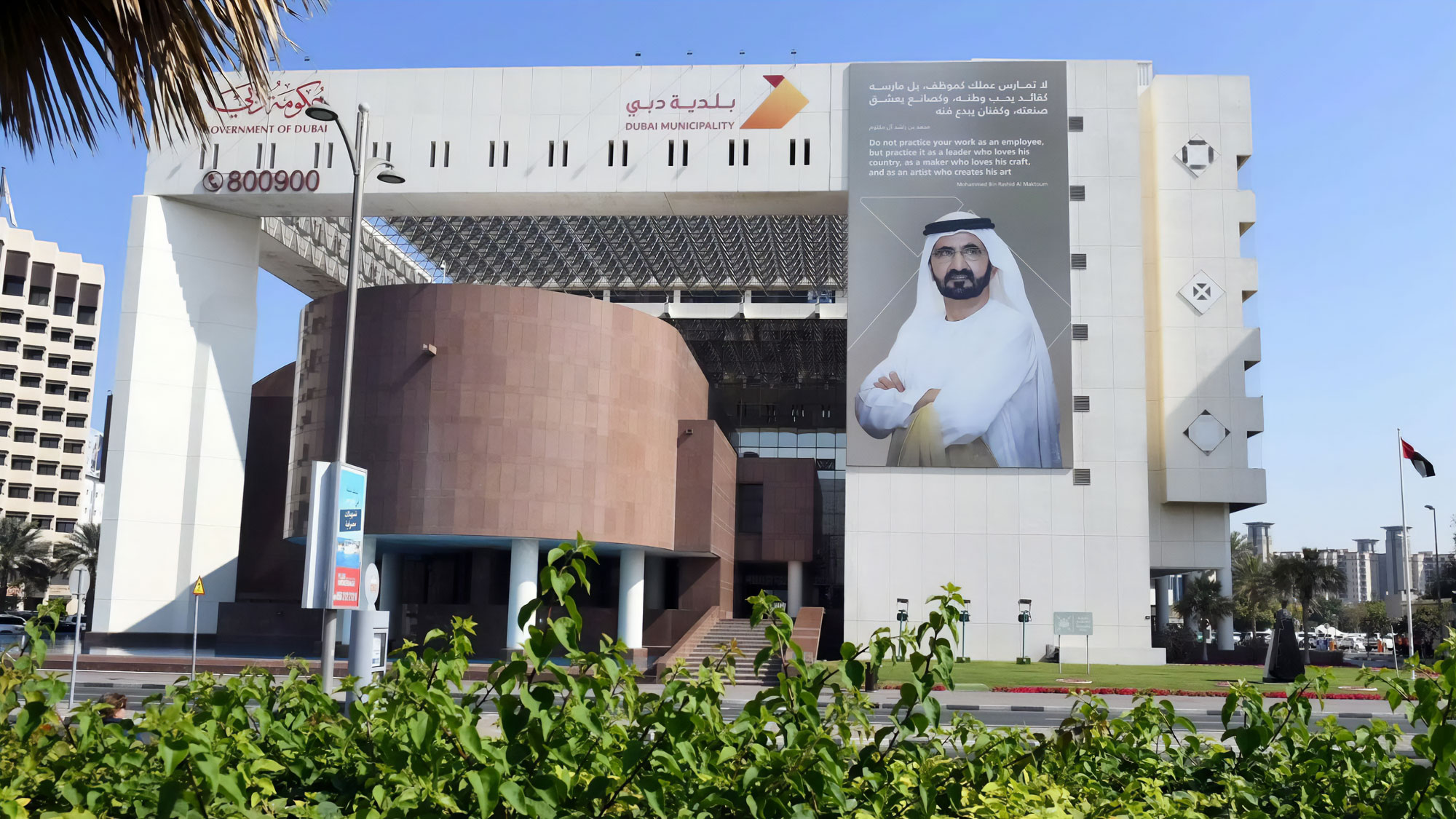
Unveiled by Dubai Municipality at the World Governments Summit 2025, the Building Intelligence Platform enhances transparency and efficiency in urban development, particularly within real estate and infrastructure.
The platform provides a central digital interface containing accurate, up-to-date information on buildings across Dubai, including height, floor count, total area and usage classifications. This eliminates information gaps for international investors and developers.
By integrating rental benchmarks, demographic insights, commercial activity and maintenance indicators, the platform enables more reliable feasibility studies and market assessments.
Aligned with Dubai’s open data policy, features such as the real-time Rental Index allow companies to plan leasing strategies with confidence, especially those operating across multiple jurisdictions.
Through geospatial systems, digital twin technologies and predictive analytics, the platform supports advanced infrastructure planning.
Launched in May 2025 by the DIFC Innovation Hub and Dubai Land Department, the Dubai PropTech Hub represents a strategic push to digitise and modernise the real estate sector.
Based within the DIFC Innovation Hub, the platform aims to support over 200 PropTech startups and scale-ups, create more than 3,000 jobs, and attract approximately $300 million (AED 1.10 billion) in investment by 2030.
Customised licences, venture-building programs and pilot projects allow founders to test and launch solutions within regulated frameworks, reducing early-stage risk.
Major developers, including Binghatti, Sobha Realty, Majid Al Futtaim and Union Properties, are already involved, ensuring innovation aligns with real market demand.
The hub supports the Dubai Real Estate Sector Strategy 2033, giving SMEs confidence to explore new PropTech opportunities.
Introduced by the Dubai Free Zones Council in July 2025, the One Freezone Passport simplifies multi-location operations for growing companies.
Businesses can now operate across several free zones using a single licence, offering flexibility for companies managing offices, warehouses or retail outlets.
Eligible applications can be approved within a week, significantly reducing timelines associated with setting up businesses in Dubai.
The structure supports more efficient tax and cost planning, particularly for SMEs scaling their workforce and physical presence.
Global brands such as Louis Vuitton have adopted the model, highlighting its value for both new entrants and established enterprises.
Also read: Top government-backed initiatives improving ease of doing business in Dubai 2025
Dubai entered 2026 with strong financial and economic foundations. The emirate has approved its largest budget ever, with planned spending of AED 82.42 billion, while revenues for 2026 are projected at AED 107.7 billion, including AED 5 billion in general reserves. These figures signalled continued capacity for infrastructure investment, digital advancement, and economic diversification.
In addition, sector performance trends suggest further expansion in healthcare, financial services, real estate, and technology-enabled industries. Continued focus on productivity gains, data-led governance, and innovation will also remain central to sustaining competitiveness.
As Dubai works toward its goals for 2033, the improvements seen in 2025 provide a solid base for firms doing business in Dubai in the coming year.
Don’t forget to share this post!
Join our network for the latest news, announcements and more.

Copyright © 2024 Seed Group. All Rights Reserved.
We use cookies to enhance your experience on our website. If you continue using this website, we assume that you agree with these. Learn more.

 Previous