

More than 2,000 funding rounds, a $51 billion (over AED 187 billion) ecosystem valuation, and 90+ accelerators currently define Dubai’s startup environment. In 2025, the emirate’s economy showed strong momentum, which can be credited to steady foreign investment, progressive regulations, and sector-specific innovation programs. This growth has boosted global confidence in doing business in Dubai, especially for international founders and scale-ups looking for speed, certainty, and access to the market.
This article is part of our year-end series that looks back at the main government initiatives and strategies shaping Dubai’s pro-business agenda in 2025.
In 2025, Dubai rolled out several important initiatives to help global startups and small- to medium-sized enterprises. From centralised business platforms to sector-focused hubs, these projects simplify regulatory processes, make it easier to get funding, and build stronger networks.
Dubai Municipality launched the Building Intelligence Platform at the World Governments Summit 2025 in February, aiming to enhance transparency and efficiency in urban development. This initiative addresses the needs of global investors and developers seeking reliable, data-driven insights in Dubai’s bustling real estate market.
The platform gives users one reliable digital interface with verified, up-to-date data on buildings throughout Dubai. It covers details like height, number of floors, total area, gross floor area, and usage classifications. This helps close information gaps for foreign investors and developers.
It integrates data on rental values, commercial activity, demographics, and maintenance benchmarks, facilitating accurate feasibility studies and market assessments.
Aligned with Dubai’s open data policy, the platform enhances predictability for international firms operating across multiple jurisdictions. Features like a real-time Rental Index enable informed leasing, pricing, and long-term portfolio strategies.
Through integration with geospatial systems, digital twin technologies, and predictive analytics, the platform supports advanced urban planning and infrastructure optimisation. This elevates Dubai’s position as a competitive environment for international capital and sustainable development.
The launch of the Dubai PropTech Hub in May 2025 by the DIFC Innovation Hub and Dubai Land Department marks a decisive move to future-proof one of the emirate’s most influential sectors. The project responds to rising demand for transparency, efficiency, and digital adoption in real estate.
Located within DIFC Innovation Hub, the platform is designed to support over 200 PropTech startups and scale-ups. It is expected to create more than 3,000 jobs and attract $300 million (approximately AED 1.10 billion) in investment by 2030.
The hub offers customised licensing, venture-building programs, and joint pilot projects, which lower barriers for founders launching their companies in Dubai within regulated settings.
Founding partners such as Binghatti, Sobha Realty, Majid Al Futtaim, and Union Properties are already participating in live pilots, embedding innovation directly with what the market needs.
The hub is in line with the Dubai Real Estate Sector Strategy 2033. This builds trust for SMEs in Dubai that want to explore new ideas in PropTech.
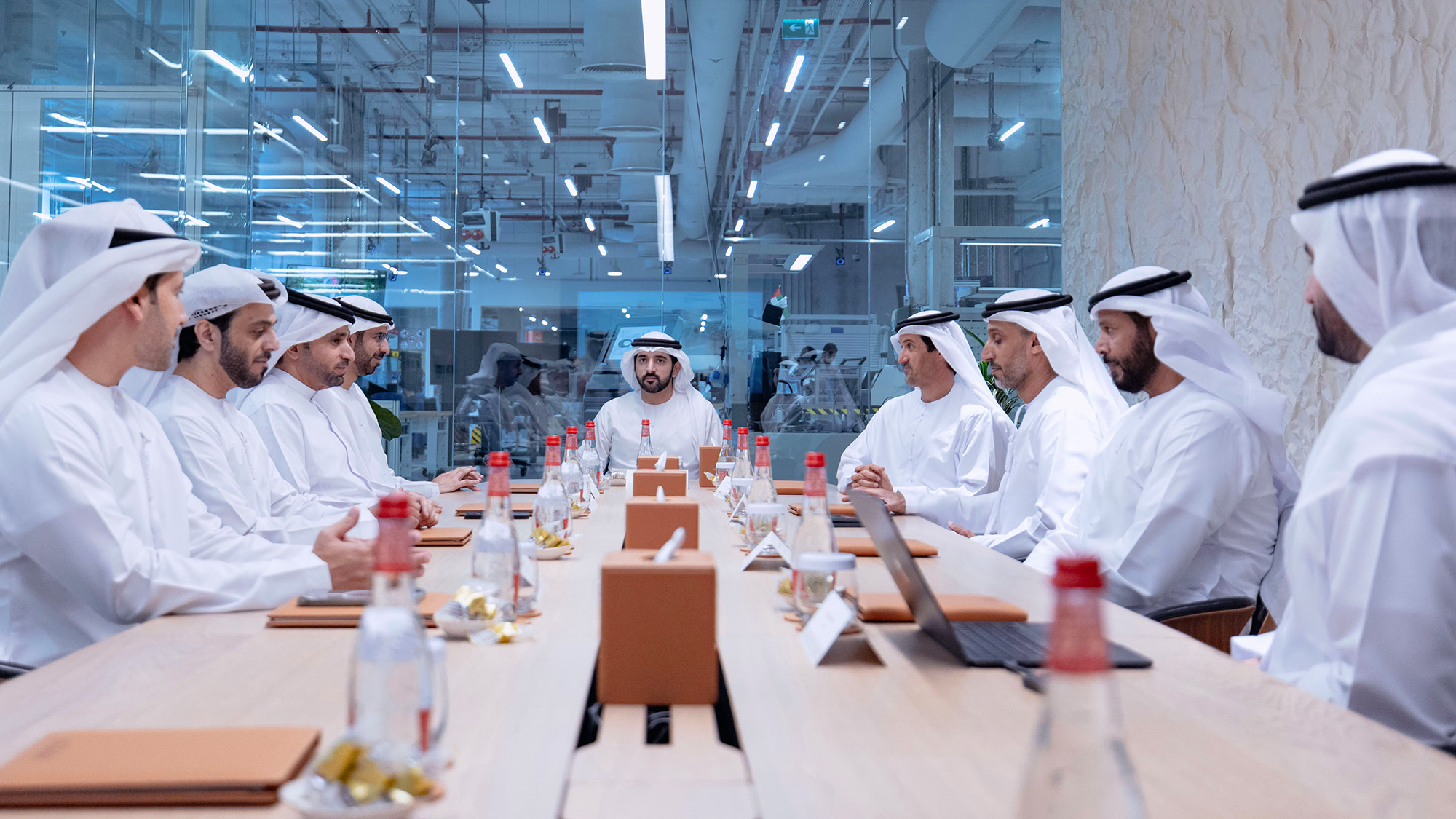
Source: Dubai Media Office
Introduced in July 2025 by the Dubai Free Zones Council, the One Freezone Passport initiative simplifies how companies structure multi-location operations.
Companies can now operate in several free zones with one license. This offers greater flexibility for companies managing warehouses, offices, and retail spaces.
Qualifying applications can be processed in just one week, speeding up the process of setting up a business in Dubai.
This model helps firms structure themselves more efficiently, especially for SMEs in Dubai that are growing their teams and operations.
Global brands, including Louis Vuitton, are the first to join, proving the initiative’s relevance to both new entrants and established players refining their strategies in Dubai.
Launched in October 2025, the Dubai Founders HQ offers a new way for entrepreneurs to connect and seamlessly access Dubai’s business environment. The initiative blends a physical infrastructure with a digital operating layer, reducing fragmentation for founders navigating complex early stages.
DFHQ combines a physical campus at 25hours Hotel One Central with a digital ecosystem designed to streamline regulatory compliance. This is undeniably vital for founders to ensure they remain focused on strategically starting or scaling their businesses in the city.
From legal structuring to banking, visas, tax, and procurement access, DFHQ provides founders with operational tools that directly support setting up a business in Dubai while lowering execution risk.
The Dubai Ecosystem Navigator gives founders access to market data, competitor information, and investor connections, which are all important for entering the Dubai market.
The platform is backed by the Dubai Economic Development Corporation, Dubai SME, and Dubai Chambers and supports the D33 agenda to create 30 unicorns and help 400 high-growth SMEs by 2033.
Also approved in October 2025, the Unicorn 30 Programme reflects Dubai’s shift from ecosystem creation to outcome-driven scale. This enterprise, led by the Dubai Chamber of Digital Economy, is part of DFHQ’s broader framework.
The initiative aims to fast-track 30 emerging companies (particularly in AI, Web3, and frontier technologies) into billion-dollar enterprises originating from Dubai.
The program provides essential resources for participants, including access to funding, advice on regulations, governance support, and help with expanding internationally. This makes it easier to start and grow a business in Dubai.
Over 80 local and international organisations contribute mentorship, pilots, and market access, strengthening Dubai’s business environment through public-private alignment.
By promoting good governance and global readiness, the Unicorn 30 Programme supports companies that use innovative technology while also ensuring that value stays within the local economy.
These initiatives significantly improve the ease of doing business in Dubai by strengthening regulatory compliance, creating better incentives, and speeding up time-to-market. As tourism, technology, logistics, healthcare, and digital services are identified as high-growth sectors, Emirates NBD projects that Dubai’s economy will expand by 4.5% in 2026, surpassing global averages.
For anyone thinking about starting a business in Dubai, the outlook for 2026 is promising: policies are focused on getting things done, infrastructure is ready for scale, and institutional support is now deeply integrated. Entrepreneurs who engage early, design for compliance, and adapt to the Dubai business environment will have the best prospects to turn opportunities into lasting success.
Don’t forget to share this post!
Join our network for the latest news, announcements and more.

Copyright © 2024 Seed Group. All Rights Reserved.
We use cookies to enhance your experience on our website. If you continue using this website, we assume that you agree with these. Learn more.

 Previous