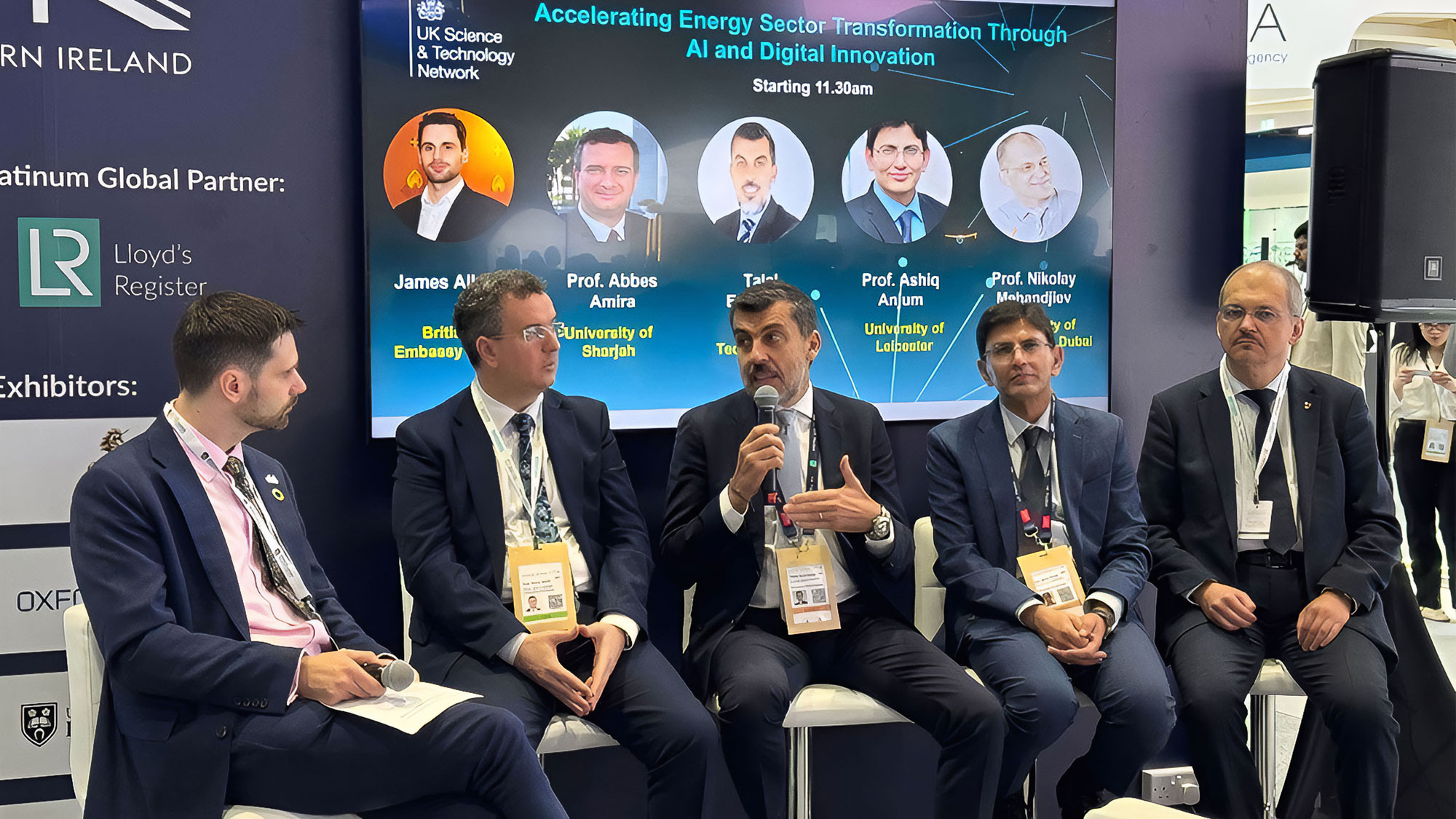

Expert insights by Bachir Akhdar, Senior Director – International Ventures at The Private Office of Sheikh Saeed bin Ahmed Al Maktoum and Seed Group
Research from the OECD and World Bank shows that technology firms adopting advanced digital capabilities improve their probability of success when expanding internationally at an early stage. As a result, startups and growth-stage companies are no longer debating whether to expand but rather where to do so. Access to capital, regulatory clarity, and commercial opportunity now shape that decision.
From my experience advising international firms entering the UAE, I have observed a consistent pattern: innovation is the entry price, but execution is the exit strategy. The global innovators that scale successfully are not necessarily defined by capital alone; they are the ones most decisive in localising their strategy and building the right strategic alliances early.

Dubai attracts innovation-focused capital rather than purely cost-driven investment. In 2025, the city set a new record in FDI for technology-based growth, ranking #1 worldwide for Greenfield FDI projects with 643 projects in the first half of the year alone.
This momentum is reinforced by executive sentiment. According to recent findings, 91% of CEOs in the UAE are optimistic about the country’s economic growth, with 85% actively supporting AI adoption. Meanwhile, 53% are actively collaborating with external partners to drive innovation. This confidence is translating into tangible results, as Dubai provides the regulatory clarity and infrastructure — such as the world’s largest innovation hub in the DIFC Zabeel District — needed to turn national ambition into commercial traction.
Unicorns do not emerge by accident; they are built through deliberate choices about where and how to scale. Dubai is currently home to tech-driven giants like XPANCEO, Tabby, and Careem, with valuations ranging from $1.35 billion to over $3 billion. These examples prove that Dubai has evolved from a regional gateway into a global launchpad where companies can secure enterprise clients and scale with precision.
Market entry is not simply a geographic expansion; it is a competitive acceleration strategy. Speed is a distinct competitive advantage in the UAE, and organisations that empower regional leadership tend to capture opportunities faster than those operating through distant headquarters.
Companies attempting to enter the region alone often underestimate the time required to navigate procurement environments and build market trust. This is where strategic partnerships serve an essential ecosystem function. By leveraging enablers like Seed Group, international firms can seamlessly navigate compliance, commercial, and cultural layers, compressing years of market development into significantly shorter timelines.
With strong FDI inflows and infrastructure designed for high-value knowledge work, the pathway from entry to scale is increasingly clear. For organisations with a defined expansion thesis and the right local alliances, the opportunity in Dubai is no longer theoretical.
It is operational.
Don’t forget to share this post!
Join our network for the latest news, announcements and more.

Copyright © 2024 Seed Group. All Rights Reserved.
We use cookies to enhance your experience on our website. If you continue using this website, we assume that you agree with these. Learn more.

 Previous